HOME | KIRKBRIDE PLAN | COTTAGE PLAN | PHOTOS | TIMELINE | ABOUT | LINKS

The Kirkbride Plan is a 19th century building style that is the direct result of Dr. Thomas Story Kirkbride. Early in his career as superintendent of the Institute of the Pennsylvania Hospital he wrote a book titled: On the Construction, Organization and General Arrangements of Hospitals for the Insane. Within his book he espoused an architectural design for the hospital, administration of said asylum, placement of the hospital, and how the hospital grounds should be created and maintained. Dr. Kirkbride developed his requirements based on a philosophy of Moral Treatment. The Kirkbride Plan hospitals were meant to promote privacy and comfort for patients. The building form itself was meant to have a curative effect, meant as "a special apparatus for the care of lunacy," and Dr. Kirkbride wrote that their grounds should be "highly improved and tastefully ornamented."

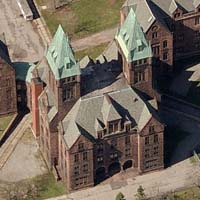
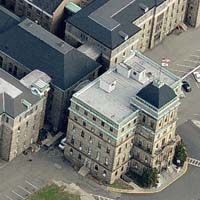
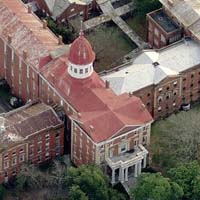
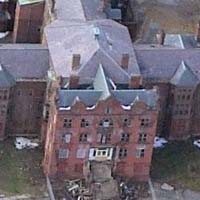
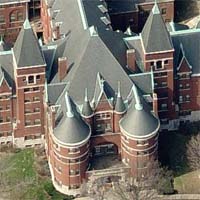
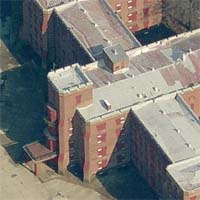
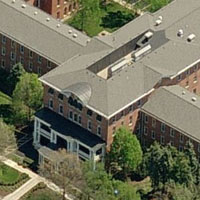
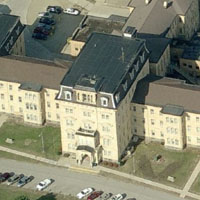
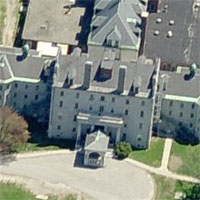
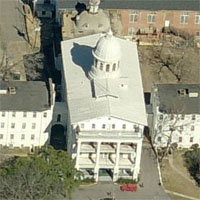
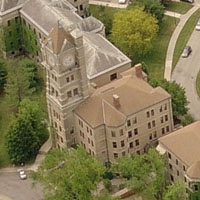
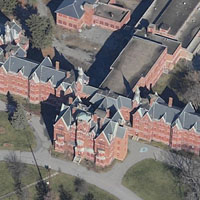
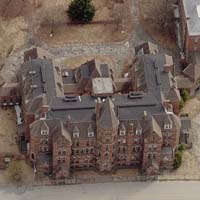
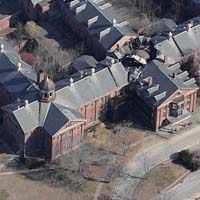
A Kirkbride Plan building consists of a center section for the hospital administration and (in the early days) a living area for the superintendant and his family. Behind and to either side of the administration section are "wings" that contain patient wards. The patient wards staggered out and back from the administration section. From the air the building would look like a "V" or a "bat wing". Chapels, auditoriums, libraries, and kitchens were often built directly onto the rear of the administration section as this was a convenient, central location for these facilities since the male and female patients resided on opposite sides of the building. The Kirkbride Plan allowed for many other advantages over previous building styles. It allowed for maximum amounts of light and ventilation into the patient wards. It allowed for easier arranging of patients by type, typically the noisier and more uncontrollable patients were placed in the wards farthest from the administration section. It also allowed for easy expansion of the hospital, additional wards could be built onto the ends of the existing building without disrupting daily life at the hospital. Kirkbride Plan buildings tended to become large, imposing, Victorian-era institutions, between 3-5 stories tall, built on large extensively manicured grounds which often included farmland.

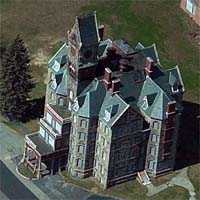
Completed in 1854, the Taunton State Hospital in Massachusetts became the first hospital built following the kirkbride plan. The slow demise of these institutions came about with a combination of the death of Dr. Kirkbride in the late 1880's and a shift in popular treatment methods for the insane. Around 1900 most new hospitals were moving away from the Kirkbride Plan in favor of smaller and more segregated styles of asylum construction. Many kirkbride buildings were lost in the 20th century due to fires, others were abandoned or demolished when newer buildings were constructed. Some have been modified so heavily that they no longer look like a kirkbride building. There are however, still a few Kirkbride buildings that have survived into the 21st century, some are still being used for their original purpose, others have been renovated for other uses like residential housing.


Kirkbride Aerial Photo Galleries

 
Danvers State Hospital Hudson State Hospital Taunton State Hospital
8 Images - 2 Super Sized 7 Images - 1 Super Sized 4 Images
Building Status: 90% Demolished Building Status: Abandoned Building Status: 100% Demolished
     
Buffalo State Hospital Greystone State Hospital Worcester State Hospital
6 Images - 1 Super Sized 9 Images - 3 Super Sized 6 Images
Building Status: Preservation Under Way Building Status: Abandoned Building Status: 90% Demolished
     
South Carolina State Hospital North Hampton State Saint Vincent’s
6 Images - 2 Super Sized 2 Images - 1 Super Sized 5 Images
Building Status: Abandoned Building Status: 100% Demolished Building Status: Preserved
     
 
St. Elizabeth State Hospital Trenton State Hospital  
6 Images - 1 Super Sized 5 Images - 2 Super Sized  
Building Status: Being Renovated Building Status: Active Hospital  


Historical photos of various Kirkbrides


A Success Story...

I find the success story of the Traverse City State Hospital to be truly inspiring. If only we could get more people like Ray Minervini into a position of power then perhaps we could save all the remaining Kirkbrides in a similar manor. Ray Minervini renovated the Traverse City Kirkbride into a mix of condos, business space, and stores. He didn't gut the building either (unlike what happened at Danvers) he renovated the existing floors inside the building. Thanks to him this beautiful Kirk has been 100% saved and will live on for future generations to enjoy.  THE FULL STORY
   
BEFORE AFTER


[BACK]


____________________________________________

Copyright 2010 - Thomas Industries - All rights reserved